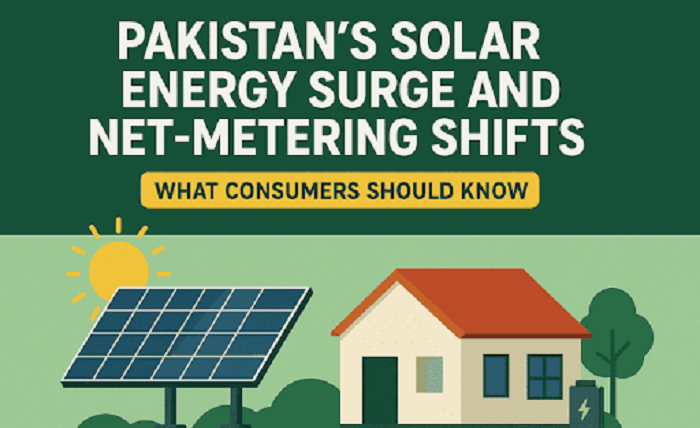
n recent years, Pakistan has witnessed a remarkable shift in its energy landscape. Solar power, once seen as a luxury for a few households, is now becoming a mainstream solution to the country’s chronic electricity shortages and high tariffs. In fact, solar now contributes to around one-fourth of Pakistan’s total energy mix, a milestone that few expected this quickly.
But while solar energy brings relief to many families and businesses, recent changes in net-metering policies have left consumers wondering: what does this mean for me?
Why Are So Many Pakistanis Turning to Solar?
There are several reasons behind the rapid adoption of solar systems:
- Rising electricity bills: With frequent tariff hikes, households and industries are searching for cheaper alternatives.
- Lower solar panel costs: Prices of panels and batteries have dropped significantly in the last few years.
- Government support & easy imports: Relaxed policies made it easier to import solar equipment, especially from China.
- Energy independence: Families want freedom from load-shedding and unreliable power supplies.
For many households, solar is no longer just an investment—it’s a necessity.
What is Net-Metering and Why Does It Matter?
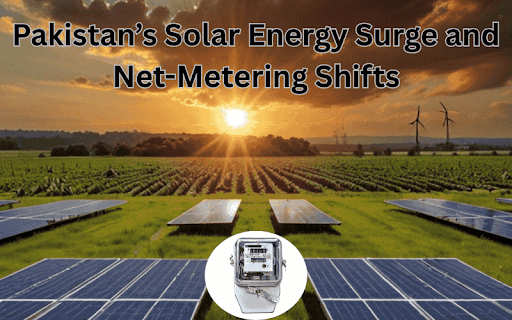
Net-metering is a system where consumers who generate electricity through solar panels can sell excess power back to the grid. This helps reduce their bills while also supporting the national grid.
Until recently, MEPCO and other distribution companies (DISCOs) were buying back solar electricity at Rs 27 per unit. That made solar an attractive investment with fast payback periods.
The Big Change: From Net-Metering to Gross-Metering
The government has now announced a shift in policy:
- Existing Contracts: Consumers already under net-metering agreements will continue to enjoy Rs 27/unit until their contracts expire.
- New Agreements: For fresh applicants, the buyback rate has been reduced to Rs 10–11.33/unit, with contracts limited to five years.
- Future Plans: Authorities are considering moving entirely towards a gross-metering system, where all solar power is sold to the grid instead of being consumed directly.
This change is designed to balance the grid and protect non-solar users, but it also means new solar investors will need to rethink their payback calculations.
Who Benefits and Who Struggles?
- Solar Users (Old Contracts): Still enjoy excellent returns and quick paybacks.
- New Solar Investors: Need to carefully calculate costs vs. savings, as the reduced rate slows down ROI.
- Non-Solar Consumers: Face rising grid costs because wealthier households are escaping high bills through solar, leaving the burden on those who can’t afford it.
This creates a challenge: while solar adoption is good for the environment, it risks widening the energy gap between rich and poor if policies don’t ensure fairness.
What Should Consumers Do Now?
- Evaluate Your Options – If you’re considering solar, calculate the return based on the new Rs 10–11.33/unit rate.
- Consider Hybrid Solutions – Pair solar with batteries to maximize self-consumption instead of selling excess.
- Stay Informed – Policies are evolving quickly, and future reforms could change the economics again.
- Track Your Bills – Whether you’re using solar or not, keeping a close eye on your monthly bill is crucial.
For MEPCO users, you can easily check your current bill status and updates at mepcowapdabill.pk.
Final Thoughts
Pakistan’s solar revolution is both exciting and challenging. On one hand, it gives families control over their energy costs and reduces dependence on fossil fuels. On the other, it highlights deep issues in how electricity is priced and distributed.
As policies shift from net-metering to gross-metering, consumers must plan smartly. Solar is still a powerful solution—but only if approached with realistic expectations about costs, returns, and long-term sustainability.