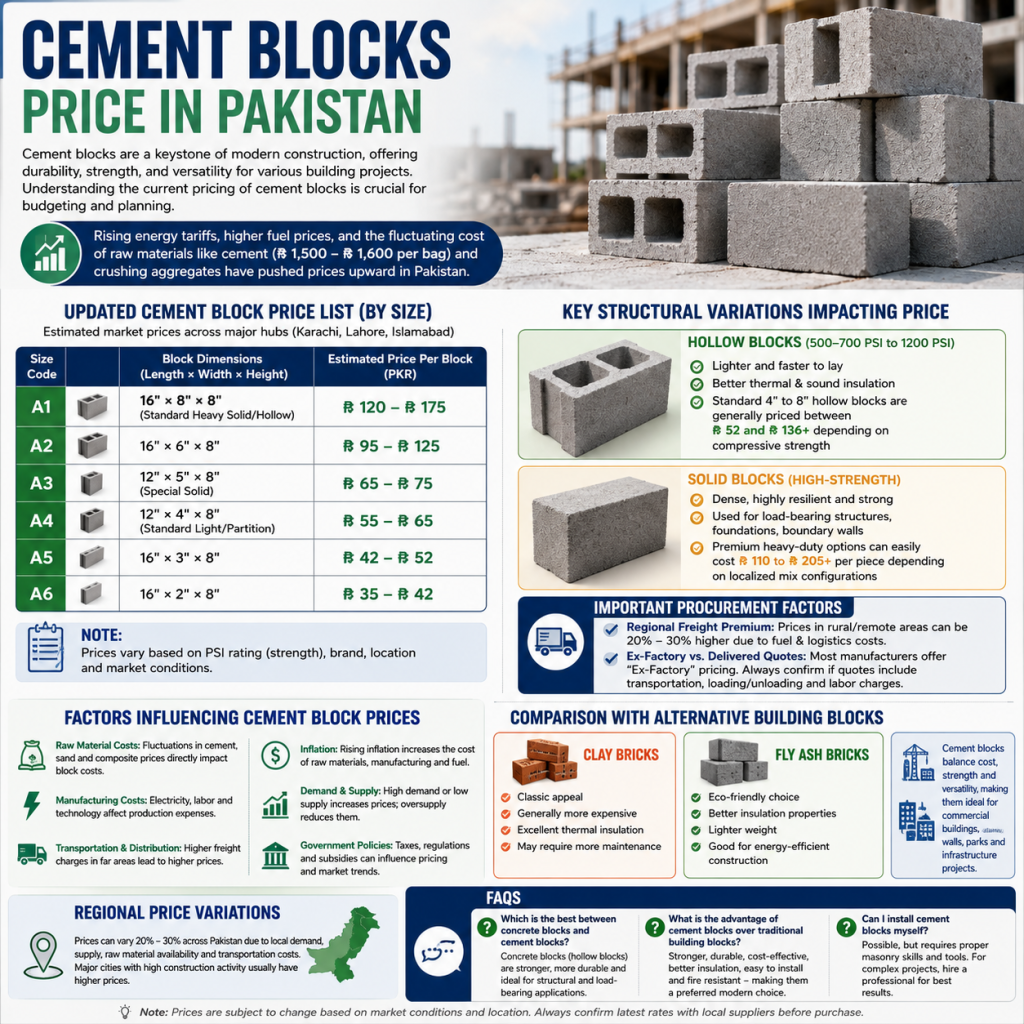
Cement blocks are a keystone of modern construction, offering durability, strength, and versatility for various building projects. Understanding the current pricing of cement blocks is crucial for budgeting and planning if you are starting a construction project. This article provides an in-depth look at Pakistan’s latest cement block prices and explores the factors influencing them.
The construction material market in Pakistan has seen an upward price shift due to rising energy tariffs, higher fuel prices, and the fluctuating cost of raw materials like cement (averaging around ₨ 1,500 to ₨ 1,600 per bag) and crushing aggregates. The baseline factory-level prices for standard solid and hollow cement blocks have been updated below.
Updated Cement Block Price List
The updated estimated market prices for concrete blocks across major hubs like Karachi, Lahore, and Islamabad vary based on structural specifications (PSI rating/strength) and the specific dimensions of the block:
| Size Code |
Block Dimensions (Length × Width × Height) |
Estimated Price Per Block (PKR) |
| A1 |
16″ × 8″ × 8″ (Standard Heavy Solid/Hollow) |
₨ 120 – ₨ 175 |
| A2 |
16″ × 6″ × 8″ |
₨ 95 – ₨ 125 |
| A3 |
12″ × 5″ × 8″ (Special Solid) |
₨ 65 – ₨ 75 |
| A4 |
12″ × 4″ × 8″ (Standard Light/Partition) |
₨ 55 – ₨ 65 |
| A5 |
16″ × 3″ × 8″ |
₨ 42 – ₨ 52 |
| A6 |
16″ × 2″ × 8″ |
₨ 35 – ₨ 42 |
Key Structural Variations impacting Price
When ordering concrete masonry units (CMUs), manufacturers typically categorize them into two distinct structural choices which greatly affect both pricing and weight:
-
Hollow Blocks (500–700 PSI to 1200 PSI): These feature hollow cores which make them much lighter and faster to lay. They offer enhanced thermal and sound insulation for outer walls. Standard 4″ to 8″ hollow blocks are generally priced between ₨ 52 and ₨ 136+ depending on the specific compressive strength required.
-
Solid Blocks (High-Strength): These dense blocks are highly resilient and primarily utilized for load-bearing structures, foundational support, and boundary walls. Premium heavy-duty options from premium brands can easily cost ₨ 110 to ₨ 205+ per piece depending on localized mix configurations.
Important Procurement Factors
-
Regional Freight Premium: The geographical note still strictly applies. Because concrete blocks are extraordinarily heavy, hauling charges add up fast. In deep rural or non-industrialized areas located away from major supply centers, you should expect prices to land 20% to 30% higher than factory gate rates due to fuel and logistics costs.
-
Ex-Factory vs. Delivered Quotes: Almost all large manufacturers provide “Ex-Factory” pricing. Always verify whether a quote includes local loading/offloading labor and transportation to your specific job site before closing a purchase deal.
Factors Influencing Cement Blocks Prices
Several factors contribute to the fluctuation of cement block prices in Pakistan:
- Raw Material Costs: The price of raw materials like cement, sand, and composites directly impacts block prices. Fluctuations in these materials can lead to changes in block costs.
- Manufacturing Costs: Electricity and labor costs can affect the overall price of cement blocks. Modern manufacturing technology and solar energy can reduce costs due to decreased labor expenses and cheap electricity.
- Transportation and Distribution: The cost of transporting cement blocks from manufacturing units to the dealers can vary, impacting the final price. Higher transportation costs in far areas can result in higher block prices.
- Higher Inflation Rates: Inflation raises the cost of raw materials, manufacturing, and transportation, leading to higher prices for cement blocks. As production expenses and fuel costs increase, manufacturers pass these costs on consumers.
- Demand and Supply: Construction activity levels and supply-demand dynamics are crucial in pricing. High demand or low supply can increase prices, while an oversupply can reduce prices.
- Government Policies: Regulatory changes, taxes, and subsidies related to construction materials can also influence cement block prices. Staying informed about relevant policies can help in understanding price trends.
Regional Price Variations
Differences in local demand and supply dynamics primarily drive regional price variations for cement block. In areas with high construction activity, such as major cities, the demand for cement blocks is uplifted, leading to higher prices due to increased competition and limited supply. Conversely, prices can be more stable or lower in regions with lower construction activity or oversupply.
Transportation and distribution costs also play a critical role in regional price differences. Areas that are far away or have less developed infrastructure face higher transportation expenses, which contribute to increased cement block prices.
Additionally, local availability of raw materials significantly impacts prices; regions closer to raw material sources often experience lower costs compared to those that rely on long-distance transportation. Depending on these reasons, cement block prices may vary widely, from 20 to 30 percent across the country.
Comparison with Alternative Building Blocks
When considering building materials, it’s useful to compare cement blocks with alternatives like clay bricks and fly ash bricks.
- Clay Bricks: Often used for their classic appeal, clay bricks are generally more expensive than cement blocks due to manual manufacturing. They offer excellent thermal insulation but may require more maintenance.
- Fly Ash Bricks: Often preferred for their environmental benefits, Fly ash bricks are used due to better insulation properties, and lighter weight, making them a good choice for energy-efficient and eco-friendly construction.
Cement blocks balance cost, strength, and versatility, making them a popular choice for construction projects such as commercial buildings, retaining walls, parks, and infrastructure projects.
Understanding the current pricing of cement blocks and the factors affecting these prices is essential for anyone involved in construction projects. By staying informed and considering various factors, you can make better purchasing decisions and ensure your projects remain within budget. Whether you’re a contractor, builder, or homeowner, this guide aims to provide you with the necessary information about cement block pricing in Pakistan.